
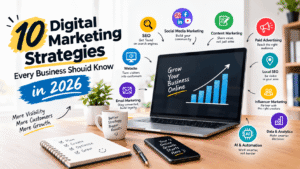
10 digital marketing strategy every buisness should know in 2026 because digital world has changed the way businesses find customers. Today, people often discover a business through a search engine, social media post, video, online advertisement, or recommendation before they ever visit a physical store. This makes digital marketing an important part of building a modern business.
But digital marketing strategy is not simply about being visible online. A successful approach for digital marketing strategy requires understanding what customers need, communicating with them in the right way, and using suitable digital channels. In 2026, businesses that combine creativity with planning and measurable results can create stronger opportunities for growth.
Here are ten digital marketing strategy that can help businesses develop a more effective digital presence.
1. Search Engine Optimization (SEO)
SEO helps a business become easier to discover through search engines. When potential customers search for information, products, or services, a well-optimized website has a better opportunity to appear in relevant results.
A business can strengthen SEO by:
- Publishing useful and original content
- Understanding what customers are searching for
- Improving website speed and mobile usability
- Organizing website pages clearly
- Using relevant search terms naturally
- Maintaining strong local visibility
SEO is a long-term investment. Instead of depending entirely on paid traffic, businesses can gradually build a sustainable source of organic visitors.
2. Social Media Marketing
Social media provides businesses with a direct way to communicate with potential and existing customers. Rather than treating social media as only an advertising platform, businesses can use it to show their personality and create meaningful interactions.
Effective social content can include:
- Educational posts
- Short videos
- Product demonstrations
- Customer stories
- Behind-the-scenes content
- Questions and discussions
The important thing is to understand where the target audience spends time. Being active on every platform is not necessary if only a few channels are relevant to the business.
3. Content Marketing
Customers often search for information before making a decision. Content marketing allows businesses to become a useful source of that information.
A company can create:
- Blog articles
- Tutorials
- Guides
- Videos
- Infographics
- Educational social posts
The strongest content focuses on helping the audience rather than constantly asking them to purchase something. When people consistently receive useful information from a brand, trust can develop naturally.
4. Paid Advertising
Paid advertising can give businesses an opportunity to reach specific audiences without waiting for organic visibility to develop. Search advertising and social media advertising can be useful for promoting products, services, offers, and campaigns.
For better results, businesses should pay attention to:
- Audience selection
- Advertising objectives
- Creative quality
- Landing-page experience
- Budget allocation
- Campaign performance
A larger advertising budget does not automatically mean better results. Relevance and proper optimization are often more important.
5. Video Marketing
Video has become an effective way to communicate ideas quickly. Businesses can use videos to explain their products, demonstrate services, answer common questions, and introduce the people behind their brand.
Useful video ideas include:
- How-to videos
- Product demonstrations
- Customer testimonials
- Educational clips
- Frequently asked questions
- Behind-the-scenes videos
A business does not always need expensive equipment. A clear message, good lighting, useful information, and authentic presentation can be enough to create engaging content.
6. Email Marketing
Email provides businesses with a direct communication channel. Unlike social media, where algorithms influence what people see, email allows businesses to communicate with subscribers who have chosen to receive their messages.
Businesses can use email for:
- Newsletters
- New product announcements
- Special offers
- Helpful tips
- Event information
- Personalized recommendations
The quality of communication matters more than sending a large number of emails. Relevant and useful messages are more likely to keep customers interested.
7. Local SEO
For businesses that depend on customers from a specific area, local SEO can be particularly valuable. People frequently search online for businesses located near them, especially when they have an immediate need.
Businesses can strengthen local visibility by:
- Keeping business information accurate
- Maintaining an updated online business profile
- Encouraging genuine customer reviews
- Creating location-focused content
- Providing clear contact information
Strong local visibility can help a nearby customer find a business at the moment they are ready to take action.
8. Influencer and Creator Marketing
Creators can help businesses introduce their products or services to established communities. However, choosing a creator should not be based only on follower numbers.
Businesses should consider:
- Whether the audience matches their target market
- Engagement levels
- Content quality
- Creator credibility
- Brand compatibility
- Campaign objectives.
A smaller creator with a highly relevant audience can sometimes provide more meaningful results than a large account with little connection to the product.
9. Conversion Rate Optimization
Bringing visitors to a website is only one part of digital marketing. Businesses also need to make it easy for visitors to become customers or leads.
Conversion optimization can involve:
- Clear calls-to-action
- Simple navigation
- Easy-to-understand information
- Mobile-friendly design
- Faster page loading
- Straightforward enquiry or checkout processes.
Even small improvements to a website can make the customer journey easier and potentially increase conversions.
10. Analytics and Performance Measurement
Digital marketing becomes much more effective when businesses understand their results. Analytics can show how people interact with websites, advertisements, social media content, and other digital channels.
Businesses can monitor:
- Website visitors
- Engagement
- Leads
- Conversions
- Advertising results
- Customer behaviour
These insights allow marketers to identify successful activities and make informed changes. Instead of relying only on assumptions, businesses can use actual performance information to improve their strategy.
Conclusion
Digital marketing strategy in 2026 is not about trying every new platform or following every online trend. It is about understanding customers and selecting strategies that genuinely support business objectives.SEO can improve discoverability, social media can strengthen relationships, content can build credibility, advertising can increase reach, video. Digital marketing strategy is very impostant.