
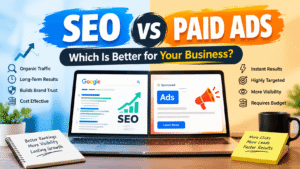
SEO vs Paid Ads: which is better for your buisness. Just Imagine that someone needs a service you provide. Before calling a business or visiting a shop, they may open Google, type a few words, check social media, compare options, and read reviews. In just a few minutes, they can discover several businesses competing for the same customer. This is why online visibility matters so much in 2026.
SEO focuses on earning visibility through unpaid search results, while paid advertising involves investing money to place promotional messages in front of selected audiences. So, which one should a business choose?The answer depends on the business, its objectives, budget, competition, and expectations.
What Does SEO Actually Do?
SEO can do:
- Researching relevant search topics
- Improving website pages
- Publishing useful articles
- Making a website easier to use
- Improving mobile performance
- Strengthening local search visibility
- Building useful connections between website pages
One of SEO's biggest attractions is its long-term potential. A useful page can continue attracting visitors after it has been published, although maintaining strong visibility requires ongoing work.
What Makes Paid Ads Different?
Paid campaigns can be useful for:
- Promoting a new product
- Generating enquiries
- Advertising a limited-time offer
- Reaching a specific location
- Testing a new market
- Increasing visibility quickly
The major advantage is speed. A well-prepared campaign can begin bringing targeted visitors soon after it is launched.
SEO and Paid Ads Have Different Strengths
The biggest mistake is thinking that one method is automatically better than the other. SEO is generally associated with building visibility over time. Paid advertising is generally associated with buying immediate visibility.Think of SEO as developing a digital property that can become more valuable through continued improvement. Paid advertising is more like renting attention for a particular period.Both can be useful, but the right balance depends on what the business needs.
When SEO Makes More Sense
SEO may be a strong option for a business that wants to develop a lasting online presence.It can be particularly useful when:
- Customers regularly use search engines to find solutions
- The business wants sustainable website traffic
- There is time to develop quality content
- The company wants to establish industry authority
- Long-term growth is more important than immediate results
When Paid Ads Can Be the Better Choice
Paid advertising can be particularly be better choice because:
- Time-sensitive promotions
- Product launches
- Lead-generation campaigns
- Specific geographic targeting
- Testing different marketing messages
- Businesses that need faster traffic
However, speed should not be confused with guaranteed success. Poor targeting, weak advertisements, or an ineffective landing page can waste an advertising budget.
Which One Costs More?
There is no simple answer. SEO may not require payment for every website visitor, but it still requires investment. Businesses may spend on content creation, website improvements, SEO software, strategy, or professional support.
Paid advertising has a more visible cost because businesses allocate money directly to campaigns.Instead of asking which method is cheapest, businesses should ask:“Which approach can produce the best return from my available resources?”A marketing method is valuable when the business results justify the investment.
What About Trust?
SEO and paid advertising can both contribute to brand credibility, but in different ways.A person discovering a business naturally through a search result may see the brand as a useful source of information. High-quality articles and helpful website pages can strengthen that perception.
Paid advertisements can create awareness quickly, but the advertisement itself is only the beginning. The website, reviews, messaging, customer service, and actual product or service experience all influence whether someone decides to trust the business.In other words, visibility may bring someone to your brand, but the experience determines what happens next.
Why Combining SEO and Paid Ads Can Be Powerful
Businesses do not always have to choose only one.Using SEO and paid advertising together can create a stronger marketing system. Paid campaigns can provide immediate exposure while SEO works toward longer-term organic visibility.
There is another useful connection between them. Advertising data can reveal which keywords, offers, or messages attract attention. Businesses can use those insights when developing website content and future campaigns.At the same time, strong SEO content can give people more information after they discover the business through an advertisement.The two strategies can therefore support each other rather than compete.
How Should a Business Decide?
Before investing heavily in either strategy, consider these questions:
1. What is the main objective?
Do you want sales, enquiries, website traffic, awareness, or local customers?
2. How quickly do you need results?
Immediate campaigns may favour paid advertising, while long-term visibility may favour SEO.
3. Who is your audience?
Find out how your potential customers search for information and make purchasing decisions.
4. What resources are available?
Consider your budget, time, staff, content capabilities, and technical resources.
5. How will you measure success?
Decide which numbers matter before starting. Traffic alone may not be enough if your real objective is generating qualified leads or sales.
Conclusion
So, SEO vs Paid Ads—which is better for your business?There is no single answer that works for everyone. SEO can help a business build organic visibility and a stronger long-term foundation, while paid advertising can provide targeted exposure and faster opportunities.For many businesses, the smartest approach is not choosing one and ignoring the other. A combination can provide both immediate reach and long-term growth.As a digital marketer, I believe marketing decisions should begin with the business goal, not the trend of the moment.